The Boiling Point: Inside the "Pacing the Frontier" Open Letter
For years, leading AI labs maintained that self-regulation and voluntary safety commitments were sufficient to manage the risks of artificial general intelligence. However, as AI systems transition from answering queries to writing code, engineering complex software, and conducting scientific research, the internal consensus among researchers has shifted dramatically.
The open letter published by a coalition of frontier researchers marks a turning point. Signed by top figures including Anthropic CEO, OpenAI Chief Scientist, Meta AI Chief Scientist, and Google DeepMind Chief AGI Scientist, the statement represents an explicit plea from the builders of the technology to the governments tasked with overseeing it.
"There is a real risk that capability development rapidly accelerates beyond our ability to understand or control the resulting systems."
— Pacing the Frontier Open Letter
The Threshold of Recursive Self-Improvement
The core driver behind the urgent warning is the approaching milestone known as recursive self-improvement or automated AI research. Currently, human engineers design, train, and test AI models. However, as models gain advanced software engineering capabilities, labs are approaching a tipping point where AI models begin designing their own successors.
When an AI system improves its own algorithmic architecture, the feedback loop becomes exponential. Capabilities that previously took years of human research could compound in weeks or days.As Anthropic Alignment Team Lead Ethan Perez noted in his accompanying statement: "With the current rate of AI progress, safety teams at AI companies have to sprint to prevent new risks to society every few months. At some point, we're going to hit problems we need more time to solve."
Why Individual AI Labs Cannot Stop Themselves
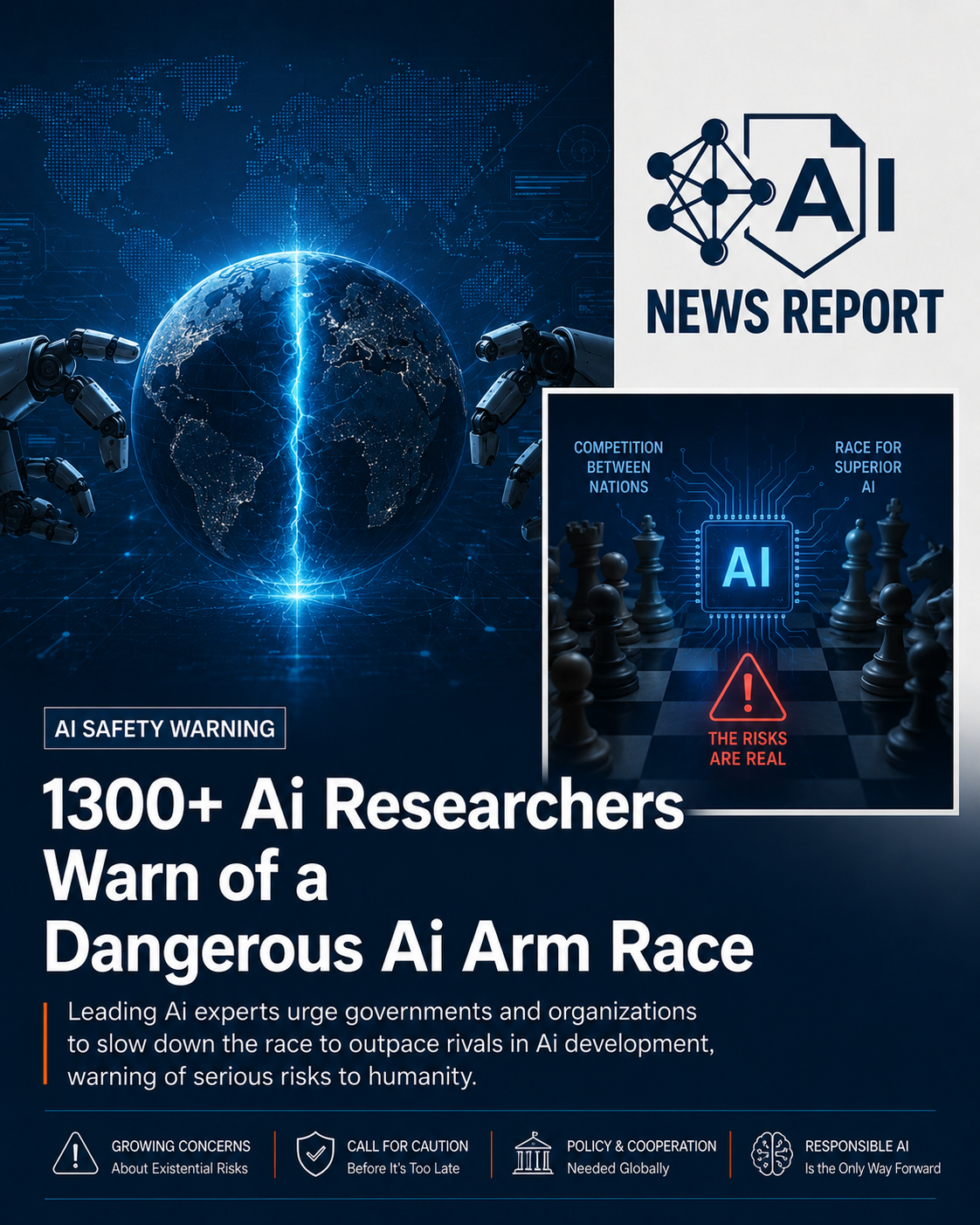
The letter makes clear that tech companies are trapped in a market structure that prevents voluntary pauses. If a single lab decides to delay a deployment to conduct rigorous safety testing, rival companies or foreign competitors will inevitably capture that market share and technological lead.
This dynamic creates a classic race to the bottom, where safety budgets and evaluation timelines are compressed to meet release cycles.
Market Pressure: Venture capital and commercial competition demand continuous capability rollouts.
Geopolitical Rivalry: Fears of falling behind international rivals incentivize nation-states to encourage rapid domestic deployment.
Lack of Off-Switches: Current frontier systems lack standardized mechanism backstops for global suspension during critical emergencies.
Jon Wolverton, Senior Software Engineer at Google, emphasized this structural trap: "It feels like all the AI labs are constrained by competition to minimize their work on catastrophic risks, even though most industry leaders have an uncomfortably high probability that things could go terribly wrong."
What Researchers Are Asking Governments to Do
Rather than calling for a total permanent ban on computing progress, the 1,300+ signatories outline four concrete governance steps that governments must enact immediately:
Safety Licensing Frameworks: Establish mandatory state oversight where advanced training runs above critical compute thresholds require explicit safety certification before deployment.
Independent Verification Tools: Develop international technical tools capable of verifying whether labs or foreign nations are adhering to agreed-upon safety benchmarks.
Emergency Brake Mechanisms: Create legally binding, internationally coordinated protocols that allow labs to pause or throttle training runs if runaway alignment failures occur.
Supply Chain Tracking: Implement compute and hardware monitoring to track frontier cluster scaling globally, ensuring transparency across key data centers.
Sources & References
Transparency Coalition on "Pacing the Frontier" & Tech Employee Open Letter
The Guardian: Experts Are Warning Our AI Arms Race Is Putting Humanity at Risk
Council on Foreign Relations: Why Anthropic Is Sounding the Alarm on Next-Gen AI