Microsoft’s Proposed AI Technology Could Change What People Say Without Viewers Noticing
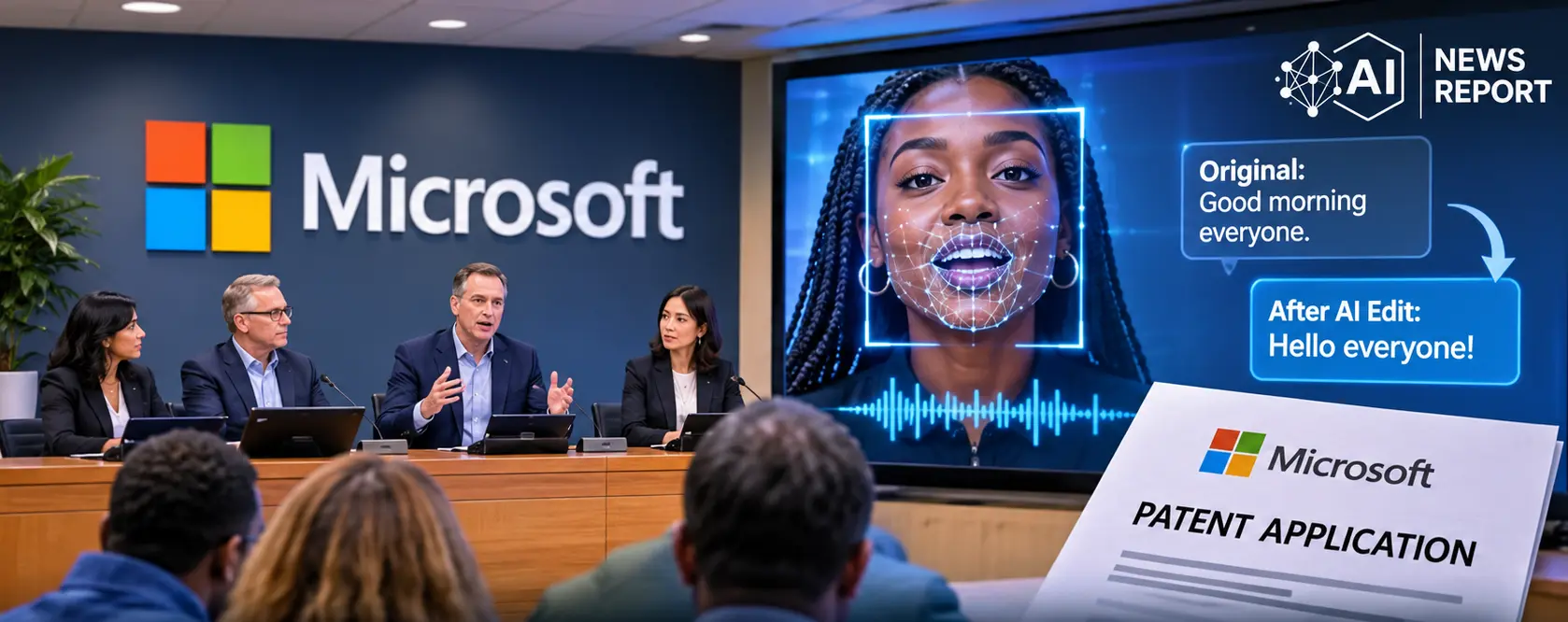
Microsoft has published a patent application describing an artificial intelligence system that could change what people say during live broadcasts and modify their lip movements to make the replacement words appear authentic. The proposed technology could allow AI to identify selected words in a speaker's audio, replace them with alternative expressions and generate corresponding video frames that match the new speech.
The application, titled Near Real-Time Artificial Intelligence (AI) Enhancement of Video or Augmented Reality (AR) Presentations of Live Events, describes a system that could process and modify audio and video within seconds. It was filed by Microsoft Technology Licensing in April 2025 and published on October 29, 2026.
How the AI speech modification system would work
The proposed system would use artificial intelligence to analyse live audio and video, identify words that need to be changed and generate replacements based on predefined instructions or information about the viewer. A generative AI system would then modify the audio and adjust the corresponding video frames, including the speaker's mouth movements, to match the replacement words.
The patent describes near-real-time processing, potentially introducing a delay of a few seconds before the modified broadcast reaches viewers. The technology could work across devices such as smartphones, tablets, cameras and augmented reality glasses.
Translation and personalised livestream experiences
Microsoft's patent describes several potential applications beyond changing individual words. One is real-time language translation, allowing viewers to hear a translated version of a speaker's presentation while seeing lip movements that correspond to the new language. This could make live broadcasts more accessible to audiences who do not understand the speaker's original language.
The system could also remove profanity, correct mispronunciations, eliminate filler words and improve speech delivery. These capabilities could be useful during lectures, presentations, interviews and other public broadcasts where clearer communication is important.
Another notable feature is personalisation. The patent describes using viewer profile information, including age, location and language preferences, to determine which words should be modified. Consequently, two people watching the same event could potentially receive different versions of the speaker's message.
Why the technology raises concerns about misinformation
Although these applications could improve communication, the ability to modify spoken statements and synchronise a person's lips with replacement words creates significant risks for media authenticity.
For example, a politician making a public statement could have certain words replaced with different expressions. If the AI also modifies the politician's lip movements, viewers might believe the person actually made the altered statement. Without clear disclosure, it could become difficult to distinguish original speech from AI-generated modifications.
The possibility of personalised broadcasts raises further concerns. If different audiences receive different versions of the same speech, they may develop different understandings of what happened during an event. This could create problems for journalism, political communication and public information, where the accuracy of recorded statements is essential.
The technology also raises questions about consent and accountability. If an AI system changes someone's words without their knowledge or permission, who should be held responsible for the resulting misinformation: the technology developer, broadcaster or individual operating the system?
Preserving original recordings and ensuring transparency
The patent also describes retaining original recordings as a reference for verification. This could allow modified broadcasts to be compared with the original audio and video, helping establish what a speaker actually said before AI intervention.
However, keeping an original recording does not automatically guarantee that viewers will know when changes have been made or have access to the unmodified version. Clear disclosure, consent and reliable access to original recordings would therefore be important safeguards if such technology were ever deployed.
A patent application, not a confirmed product
Microsoft's filing describes how the proposed system could work, but it does not confirm that the company has developed a finished product or intends to release it commercially. There is no confirmed launch date or announcement that the technology will be integrated into Microsoft's existing services.
Nevertheless, the application highlights how AI-powered audio and video editing could evolve. As generative AI becomes increasingly capable of producing realistic speech and facial movements, the distinction between original recordings and digitally modified content could become more difficult for audiences to identify.
What this means for AI accountability
Microsoft's proposed technology highlights an important challenge for the media industry: artificial intelligence is becoming capable of changing not only how information is presented, but also what audiences believe people have said.
Real-time translation and speech enhancement could improve accessibility and communication across languages. However, the same capabilities could be used to manipulate public statements, distort political discussions or misrepresent individuals.
For journalists, broadcasters, regulators and technology developers, the challenge will be ensuring that AI-generated changes are authorised, transparent and verifiable. As AI becomes more involved in producing and distributing information, protecting the authenticity of public communication will be essential to maintaining public trust.