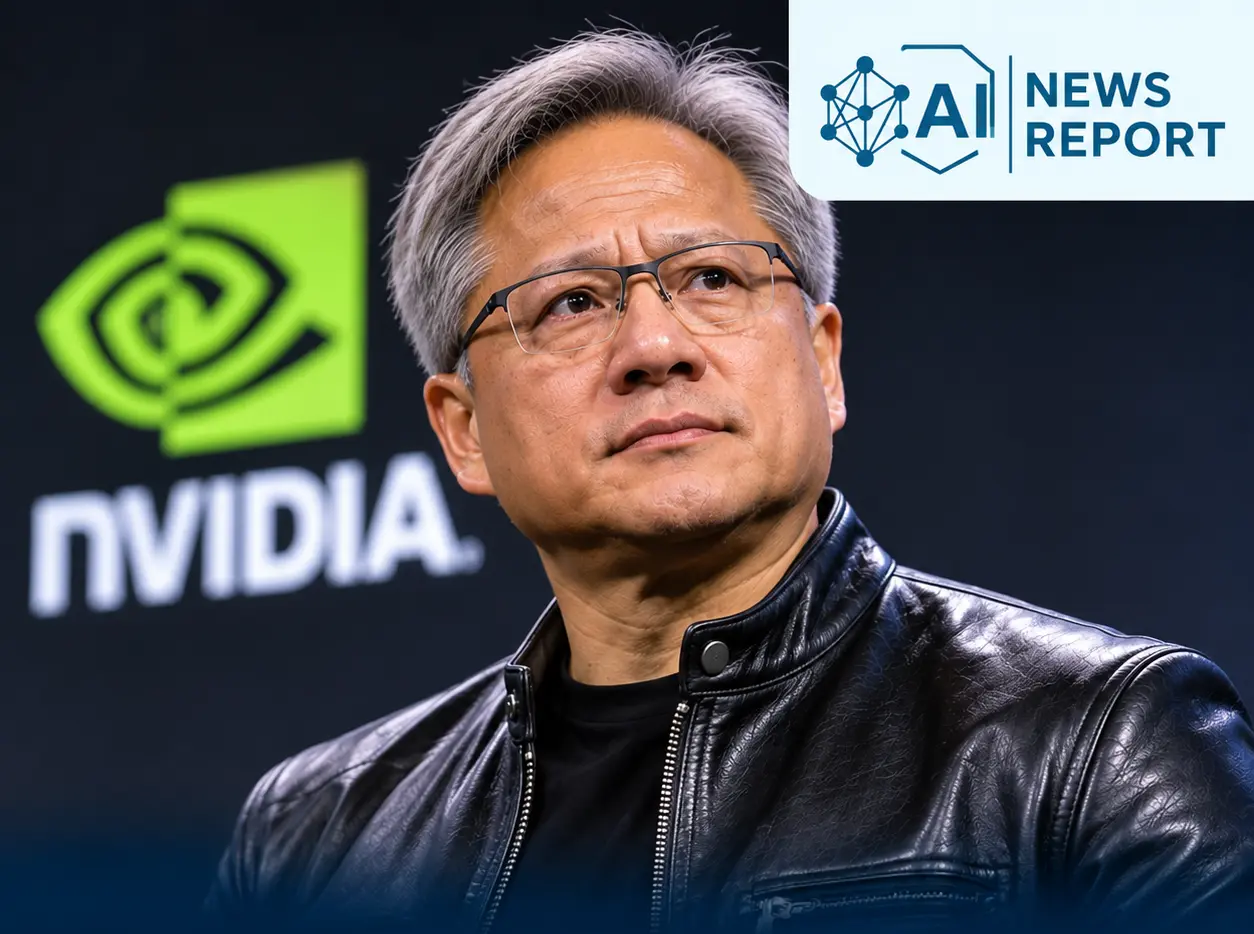
Nvidia is facing a leadership crisis that could have significant implications for the global artificial intelligence industry. The company's board is reportedly considering removing Chief Executive Officer Jensen Huang following revelations of two alleged extramarital relationships, one of which has attracted attention over possible connections to Chinese intelligence. While the allegations have raised questions about Huang's personal conduct, the bigger concern for the technology industry is what his possible departure could mean for the future of artificial intelligence.
Nvidia has become one of the most influential companies in the AI industry, supplying the graphics processing units (GPUs) and computing infrastructure used to develop and operate advanced AI systems. Companies such as OpenAI, Microsoft, Google and Meta depend on powerful computing resources to train and run their AI models, making Nvidia a critical supplier within the global technology ecosystem. Any significant disruption to its leadership could therefore have consequences beyond the company itself.
Why Nvidia's Leadership Matters to AI Development
The development of advanced artificial intelligence requires enormous computing power. Training large AI models involves processing vast amounts of data through specialised hardware capable of performing multiple calculations simultaneously. Nvidia's GPUs have become central to this process, supporting the development of generative AI systems, large language models and other advanced computing applications.
Beyond hardware, Nvidia has strengthened its position through CUDA, a software platform that allows developers to use its processors for AI training and other complex computing tasks. This combination of hardware and software has created an extensive ecosystem that many AI developers rely on. As a result, Nvidia's leadership decisions can influence the direction of investment, innovation and infrastructure development across the industry.
Huang's Possible Departure Raises Questions About AI's Future
Jensen Huang co-founded Nvidia in 1993 and has led the company through its transformation from a graphics processor manufacturer into a major supplier of AI computing technology. His leadership has been central to Nvidia's expansion into data centres, AI accelerators, networking and software platforms.
According to Reuters, Nvidia's board was meeting on November 11 to consider Huang's future following reports of two alleged relationships. The developments have raised questions about executive accountability and the company's leadership structure. Although Nvidia has not officially announced his removal, the possibility of a leadership transition has created uncertainty about who would guide its future AI strategy.
A change at the top would not automatically disrupt Nvidia's operations, but a new CEO would inherit responsibility for maintaining its position in an increasingly competitive AI hardware market. The company would need to sustain its investment in next-generation processors, maintain relationships with major AI developers and continue expanding the software ecosystem that supports its products.
AI Infrastructure and Global Technology Competition
Nvidia's importance extends beyond the processors used to train AI models. Its technologies support large data centres operated by cloud computing providers and technology companies investing billions of dollars in AI infrastructure. These facilities provide the computing capacity required to develop, deploy and operate increasingly sophisticated AI systems.
A leadership change could therefore attract attention from companies making long-term investments in Nvidia-powered infrastructure. These businesses depend on the company's ability to maintain its product development plans, deliver new processors and provide reliable technological support. Any prolonged uncertainty could influence investor confidence and the decisions of organisations seeking alternatives to Nvidia's hardware.
The situation also comes at a time when competition in AI computing is intensifying. Major technology companies are investing in their own processors to reduce their dependence on external suppliers. Nvidia's ability to maintain its technological advantage will depend on continued innovation and stable leadership as competitors attempt to gain a larger share of the AI infrastructure market.
National Security Concerns Add Another Dimension
The controversy has also attracted attention because of its possible implications for AI chip security and international technology competition. One of the alleged relationships involves Alice Huang, a business executive associated with Singapore-based data centre company Megaspeed. US intelligence officials reportedly suspected that she had connections to Chinese intelligence, while investigators examined concerns about the possible diversion of Nvidia chips to Chinese companies.
These allegations have not established that Nvidia's confidential technology was compromised or that Huang knowingly participated in any intelligence operation. Nevertheless, they highlight the security challenges surrounding advanced AI processors, which are increasingly treated as strategic assets by governments.
The United States has imposed restrictions on the export of certain advanced AI chips to China because of concerns about their potential military and strategic applications. Nvidia's position in this market makes compliance with export regulations particularly important. Any evidence of chip diversion or weaknesses in distribution controls could attract further regulatory scrutiny and influence future policies governing international access to AI computing technology.
What Nvidia's Leadership Crisis Means for the AI Industry
The uncertainty surrounding Huang's future has already affected investor confidence. Reuters reported that Nvidia shares fell more than 8% in extended trading on November 11 following reports that the board was considering his removal. The market reaction reflects concerns about the company's leadership stability and the potential implications for its future growth.
Huang's possible departure would also raise questions about succession planning. Nvidia has built much of its public identity and strategic direction around its co-founder, making the search for a successor particularly important. Whoever takes over would need to maintain the company's relationships with major AI developers, oversee the development of future processors and navigate increasing competition and international regulation.
For the wider AI industry, the situation demonstrates how much technological progress depends on the stability and decisions of companies supplying critical infrastructure. While public attention often focuses on new AI models and applications, the hardware manufacturers supporting those technologies play an equally important role in determining how quickly the industry can advance.
As of November 12, 2026, Nvidia's board had reportedly met to consider Huang's future, but no official announcement confirming his removal had been made. The outcome could influence not only the company's direction but also investor confidence, AI infrastructure investment and the broader semiconductor industry.
The developments ultimately highlight an important issue for the future of artificial intelligence: the companies controlling essential AI infrastructure must maintain strong leadership, responsible governance and secure technology supply chains. Nvidia's leadership crisis is therefore more than a corporate controversy; it is a reminder of how decisions within one major technology company can have implications for the global AI ecosystem.