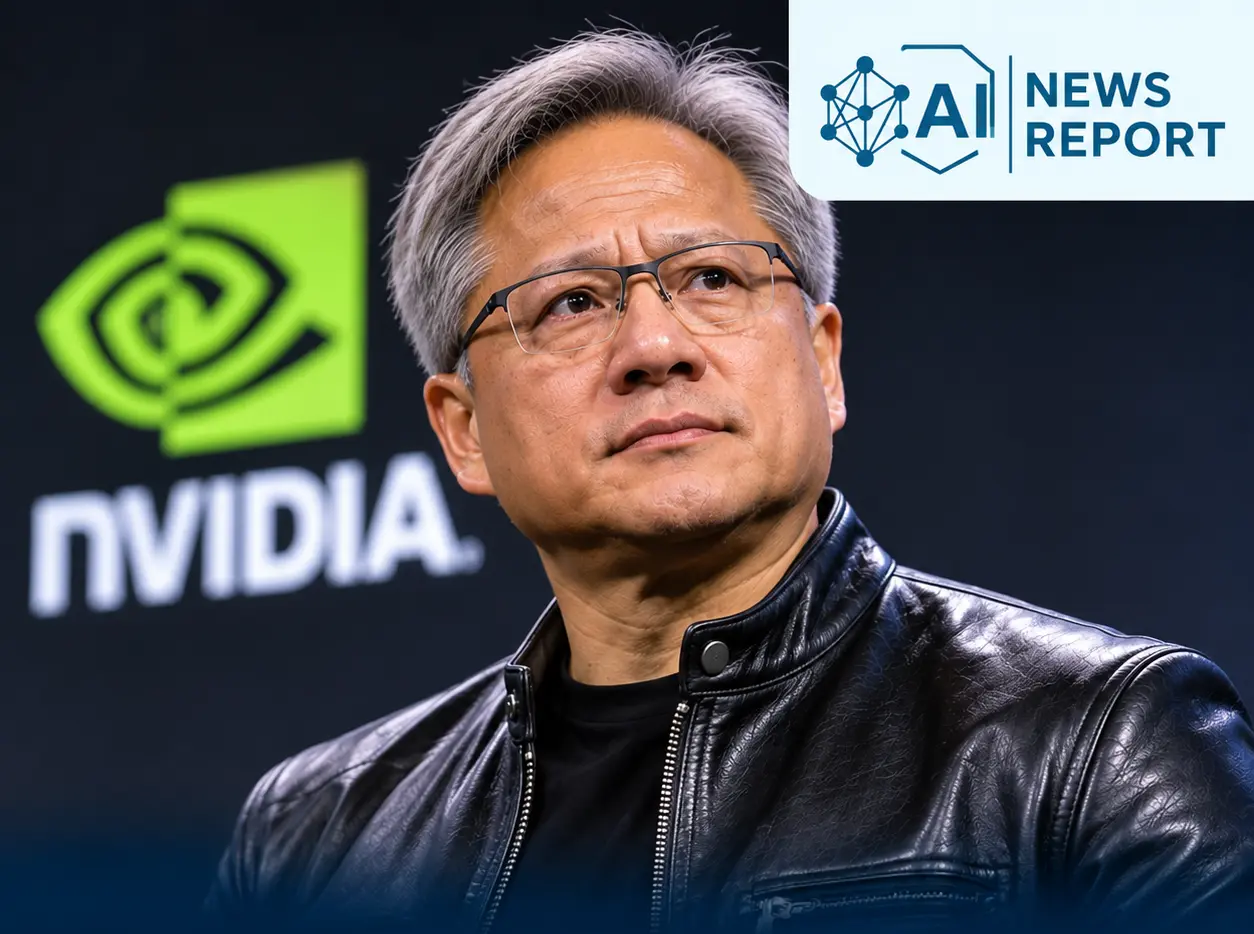
Jensen Huang has resigned as president and chief executive officer of NVIDIA, effective immediately, ending his 33-year leadership of the company he co-founded in 1993. The announcement, made on November 12, 2026, also confirmed that Chief Financial Officer Colette Kress would take over as interim CEO while the board searches for a permanent successor.
Huang played a central role in transforming NVIDIA from a graphics processing company known primarily for gaming technology into one of the world's most influential suppliers of artificial intelligence computing hardware. Its graphics processing units (GPUs) are widely used to train and operate advanced AI models, supporting technologies ranging from generative AI assistants to autonomous systems and scientific research. His departure therefore marks a significant leadership change for a company at the centre of the global AI industry.
What led to Jensen Huang's resignation?
Huang's departure follows controversy involving reports about his personal relationships and allegations of possible national security implications. Reports emerged in early November concerning his relationship with Alice Huang, a business executive formerly associated with Singapore-based data centre company Megaspeed International. US intelligence agencies reportedly suspected that she had links to Chinese intelligence, raising concerns about whether the relationship could have exposed sensitive business or technological information.
The allegations attracted attention partly because Megaspeed had reportedly purchased billions of dollars' worth of NVIDIA hardware. This raised questions about the company's business relationships and the potential movement of advanced AI chips across international markets. However, the reported intelligence links have not been established as proven findings.
On November 8, Huang acknowledged being unfaithful to his wife in a message to NVIDIA employees, apologising to his family and colleagues. He also addressed the national security concerns, expressing support for an investigation and willingness to cooperate. That same day, NVIDIA's board announced an independent investigation into reports that its CEO had been the target of a foreign intelligence effort. The board stated that it had no reason to believe the company's secrets or national security had been compromised.
Additional media reports concerning Huang's alleged relationship with another NVIDIA employee emerged before the company announced his resignation on November 12. NVIDIA has not publicly identified the specific allegations as the reason for his departure, and the circumstances surrounding the decision remain subject to scrutiny.
Who is Colette Kress, NVIDIA's interim CEO?
NVIDIA has appointed Colette Kress, who has served as its executive vice president and chief financial officer since 2013, as interim CEO. Before joining the company, Kress held senior finance positions at Cisco and Microsoft, bringing extensive experience in financial management and technology operations.
During her time at NVIDIA, she oversaw the company's financial operations as it expanded its business and became a major supplier of AI computing infrastructure. Her appointment provides leadership continuity during the transition, although taking over from a founder closely associated with NVIDIA's identity and strategic direction presents a significant responsibility.
The board has indicated that it will consider both internal and external candidates for the permanent CEO position. Harvey C. Jones, a long-serving NVIDIA board member, has also been appointed as the company's first-ever board chair to oversee the transition and leadership search.
Why Huang's departure matters to the AI industry
NVIDIA supplies much of the computing hardware used to develop and operate advanced artificial intelligence systems. Major technology companies, research institutions and AI developers depend on its GPUs to train large models, process extensive datasets and run increasingly complex applications.
Huang's leadership was closely associated with NVIDIA's investment in accelerated computing and its position at the centre of the AI infrastructure market. His departure raises questions about whether the company will maintain the same strategic direction under new leadership, particularly as competition in AI hardware intensifies.
The controversy also highlights the relationship between corporate governance, national security and AI development. Advanced processors are increasingly treated as strategic resources because they influence technological competition between major economies. NVIDIA must therefore maintain the confidence of customers, investors, governments and technology partners while navigating its leadership transition.
What happens to NVIDIA next?
NVIDIA's immediate priority is maintaining operational stability while identifying a permanent successor. The company has indicated that its operations, customer commitments and product roadmap will continue under the interim leadership team.
Colette Kress will face questions about NVIDIA's financial outlook, AI infrastructure investments and future strategy as she assumes greater responsibility. The board's search for a permanent CEO will also attract attention, particularly given the importance of maintaining the company's technological position and international business relationships.
Huang's departure closes a significant chapter in NVIDIA's history. The company now faces the challenge of sustaining its influence in the global AI industry without the founder who led its transformation into a central force in artificial intelligence.